You get off the train at 8:40. You are hungry, tired, and the konbini is right there, glowing. You know half of what is inside has pork extract or mirin in it, and the half that does not is another onigiri.
Weeknight cooking in Japan does not have to be either a konbini compromise or an hour at the stove. With a handful of staples in the cupboard and freezer, you can make a proper halal dinner in about fifteen minutes. Here is how.
The 15-minute pantry
Keep these at home and every recipe below is possible:
- Frozen paratha and chapati from our bread and paratha section
- Ready-to-eat curries in pouches and cans, from our ready-to-eat pantry
- Boiled chickpeas and beans in cans or pouches
- Curry pastes: Thai red and yellow curry paste, tamarind paste, tomato paste
- Quick-cook rice (jasmine needs no soaking)
- Noodles and pasta
- Eggs, onions, frozen vegetables from the local supermarket
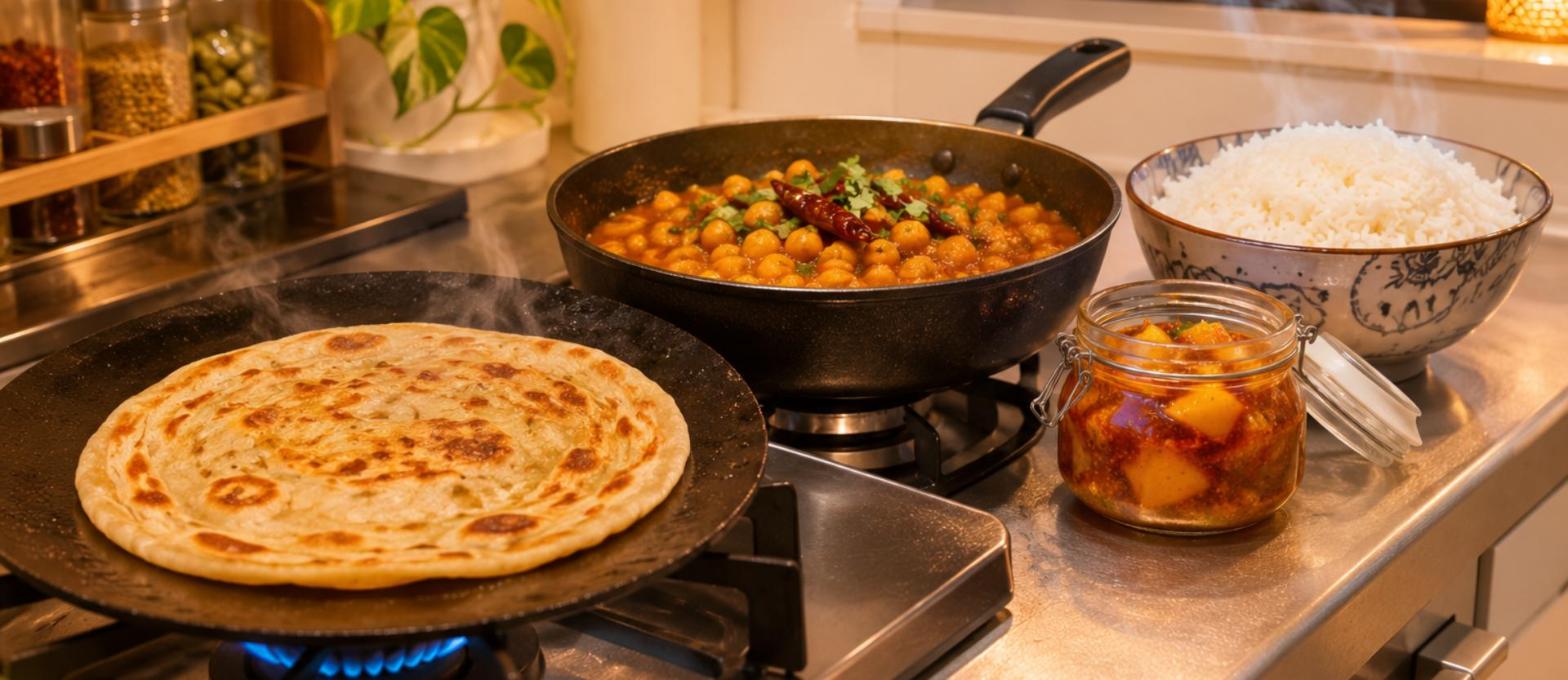
1. Chana masala with paratha
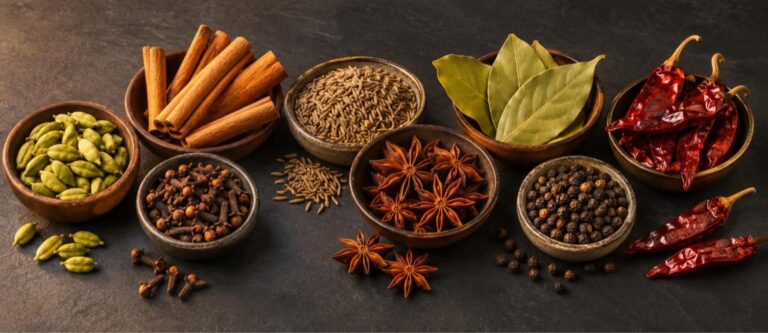
Fry one sliced onion in oil for five minutes. Add a spoon of ginger-garlic paste, a spoon of tomato paste and your usual curry spices. Tip in a drained can of chickpeas, a splash of water, simmer for five minutes. While it simmers, cook two frozen parathas on a dry pan, about two minutes each side.
Time: 15 minutes.
2. Ready curry, upgraded
Pouch curries like MTR Paneer Makhani, Sharma’s Saag Chicken or a can of Lazzat Shahi Haleem are good on their own. Make them great in two minutes: heat, then add a squeeze of lemon, fresh coriander or spring onion, and a few crispy fried onions on top. Serve with rice or paratha.
Time: 5 to 10 minutes.
3. Thai red curry with vegetables
Fry two tablespoons of Thai red curry paste in a little oil for one minute. Add a can of coconut milk and a bag of mixed frozen vegetables, plus tofu or prawns if you have them. Simmer seven minutes. Season with a little sugar and salt. Serve on jasmine rice.
Check the label on any curry paste for shrimp paste or fish sauce if you prefer to avoid them. Find pastes on our paste shelf and coconut milk in coconut items.
Time: 15 minutes (start the rice first).
4. Egg bhurji paratha rolls
Scramble four eggs with chopped onion, green chilli, tomato, turmeric and salt. Spoon onto hot parathas, add a little pickle or chutney, roll up. Kids love these and they pack well for lunch the next day.
Time: 10 minutes.
5. Masala noodles
Boil instant masala noodles (check the label: many South Asian brands are made without animal extracts), then stir-fry them with an egg and whatever vegetables are in the fridge. A spoon of chilli sauce on top finishes it. See noodles and pasta.
Time: 10 minutes.
6. Dal tadka from the freezer
On Sunday, cook a big pot of masoor dal and freeze it in single portions. On a weeknight, reheat a portion, then pour over a quick tadka: hot ghee with cumin seeds, a dried red chilli and sliced garlic. Serve with rice. It tastes like it took an hour.
Time: 10 minutes on the night.
Make it a habit, not a rescue
The trick is not the recipes. It is restocking before you run out. Keep a note on your phone, and when you use the last pack of paratha or the last can of chickpeas, add it to the list straight away. One order a month keeps the 15-minute pantry full.
Start with the essentials: ready-to-eat meals, parathas and chickpeas and lentils, or browse the whole shop.