
Ramadan in Japan: The Complete Iftar and Suhoor Pantry Checklist
In Dhaka, Karachi or Jakarta, Ramadan is in the air. The streets fill with iftar stalls an hour before Maghrib and everything slows down. In Japan, the office still closes at 6, the train is still full, and the nearest halal store might be forty minutes away.
That is why Muslims in Japan who enjoy Ramadan most tend to do one thing early: they stock the pantry before the first fast. Here is the checklist our customers use, split by suhoor, iftar and the dishes that make Eid feel like Eid.
Before Ramadan starts: the big shop
Do one large order in the week before Ramadan. It saves you from shopping while fasting, and it means you are not depending on what is left on the shelf in the last ten nights. Heavy items like rice, atta, oil and chickpeas are the ones worth ordering early.
Suhoor: food that keeps you going until Maghrib
A good suhoor is slow to digest: complex carbohydrates, protein, some fat and plenty of water. Sugary food at 4 a.m. means hunger by 11.
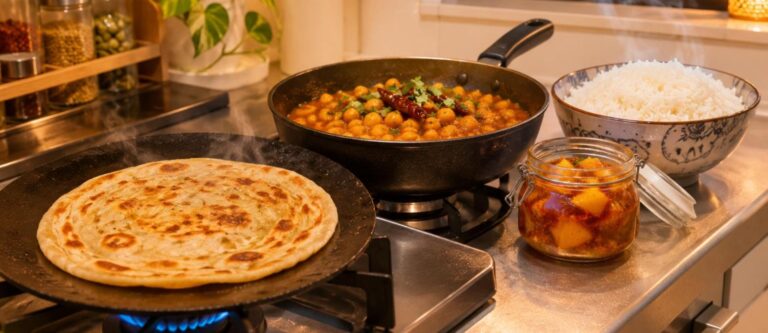
- Atta and ready flatbreads. Whole wheat atta for fresh roti, or ready parathas and chapati like Kawan Plain Paratha, Haldiram’s Aloo Paratha and JB Chapati when you do not want to knead at 3:30 a.m.
- Lentils and beans. A pot of dal made the night before reheats in minutes. Stock up on beans and lentils.
- Eggs and yoghurt from your local supermarket.
- Dates. A few dates at suhoor give slow, steady energy.
- Oats and honey for a quick bowl when you are too sleepy to cook. See our dry foods and honey.
Iftar: breaking the fast the way you grew up with
Dates first
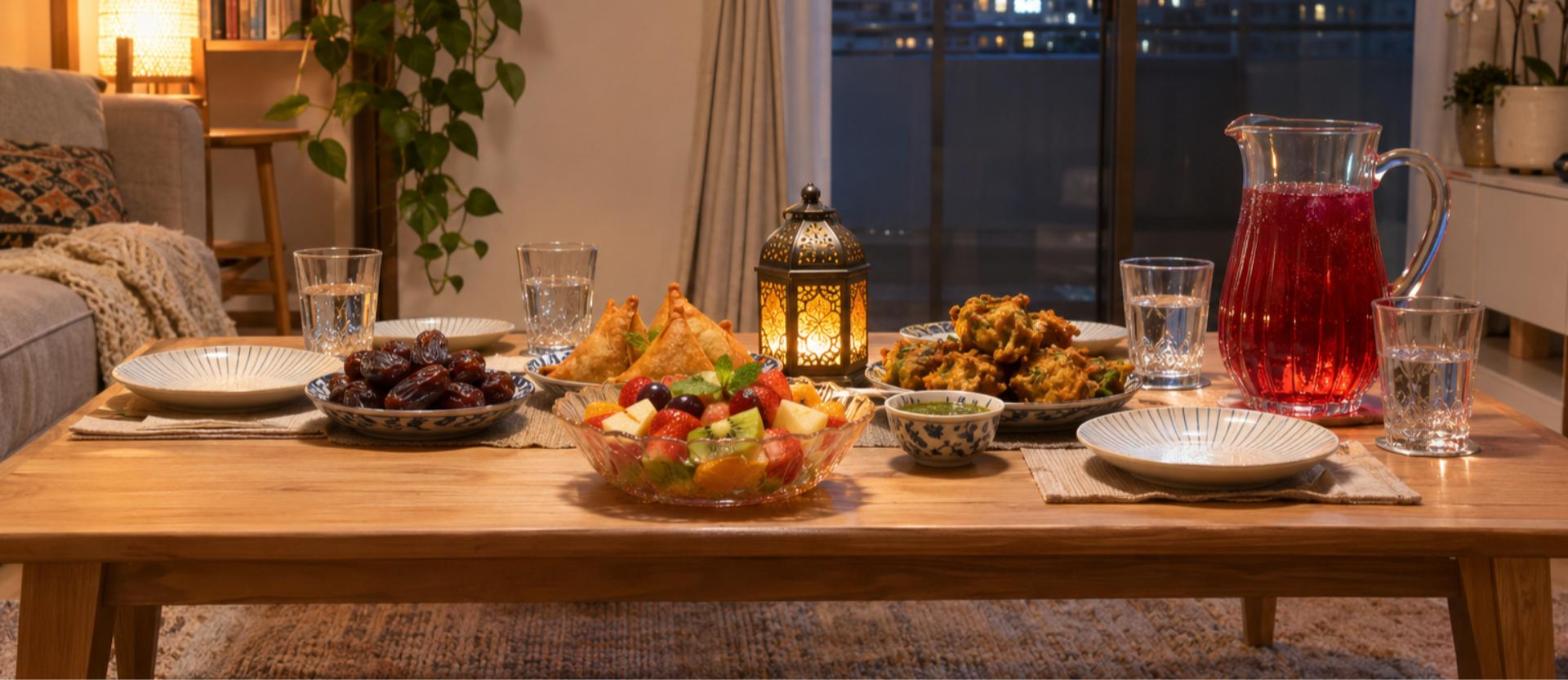
Following the Sunnah, most of us break the fast with dates. Buy a mix of everyday and special-occasion dates: Deglet Nour on the branch for the family table, Medjool for guests, and Ajwa for the nights you want to make special. All of these are in our dates section.
Drinks
After a long fast, a cold sweet drink is what the body asks for. Keep rose syrup drinks, juices and lassi ingredients ready. Browse drinks and juices.
Iftar classics
- Chickpeas for chana and chhola. Boiled chickpeas in a can or pouch save 40 minutes of cooking. Dried chickpeas are cheaper if you soak them the night before.
- Gram flour (besan) for pakora, beguni and piyaju.
- Flattened rice and puffed rice for the Bangladeshi iftar plate.
- Haleem. Make it from scratch with a haleem mix, or keep a few cans of ready haleem for weeknights.
- Frying oil. Iftar uses more oil than any other month. Our sunflower oil comes in 1, 3 and 5 litre bottles.
Batch-cook on the weekend
Working full time while fasting is tiring. Two hours on a Saturday can cover most of the week:
- Cook a large pot of dal and a chickpea curry. Both freeze well in portions.
- Shape and freeze samosas or kebabs on a tray, then bag them. They fry straight from frozen.
- Soak and boil a big batch of chickpeas.
- Mix a jar of chaat masala so iftar plates come together in five minutes.
The last ten nights and Eid
Order your Eid ingredients early, before the rush: basmati or aromatic polao rice, ghee, vermicelli for shemai and seviyan, sugar, milk powder and dry fruits. Bangladeshi favourites like Banoful Lacha Shemai sell fast in the final week. You will find what you need in dessert making and ghee and oil.
Printable checklist
- Dates (everyday + special)
- Basmati / polao rice
- Atta and ready parathas
- Lentils, chickpeas, besan
- Frying oil and ghee
- Drinks and syrups
- Haleem mix or ready haleem
- Vermicelli, milk powder, sugar for Eid desserts
- A few ready-to-eat meals for exhausted nights
May Allah accept your fasts. Start your Ramadan shop at Eusa Halal Mart.
Found this useful? Share it with a friend in Japan.
In this article
Stock your halal pantry in one order
Rice, spices, pastes, ready meals and snacks from Bangladesh, Pakistan, India, Turkey, Thailand and more.
Shop by category
More from the Eusa kitchen

15-Minute Halal Dinners for Busy Weeknights in Japan
Long shifts and longer commutes make convenience store dinners tempting. Here are six real halal dinners you can put on the table in about fifteen minutes with a few smart staples in the pantry.
Turkish Snacks in Japan: How to Read the Label Before You Buy
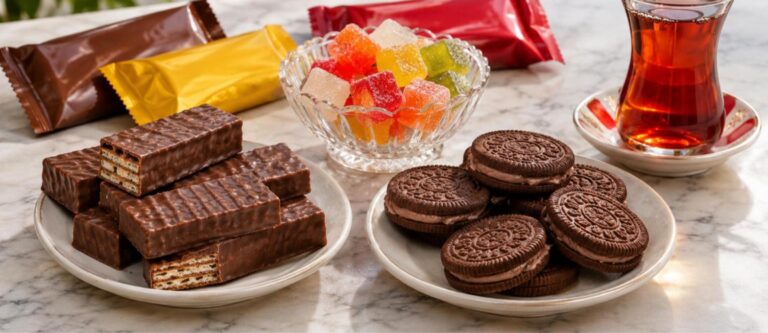
Ülker, Eti and Tayaş are lunchbox favourites for Muslim families in Japan. Here is how to read a Turkish, Indonesian or Malaysian snack label in thirty seconds, which words to look for, and why gelatin is the ingredient to check first.
10 Whole Spices Every South Asian Kitchen in Japan Needs (and How to Keep Them Fresh)
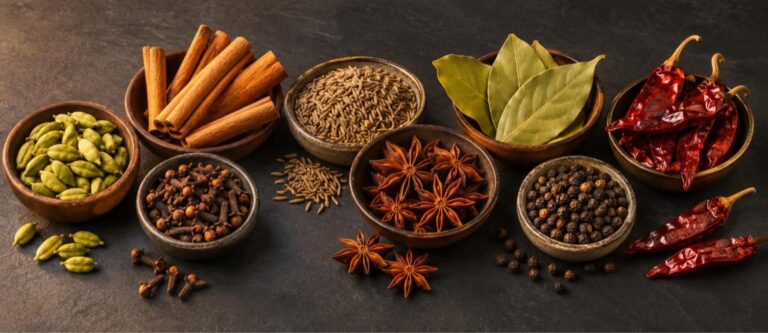
Ground spice loses its smell in months. Whole spice keeps it for a year or more. Here are the ten whole spices that do most of the work in Bangladeshi, Pakistani and Indian cooking, what each one does, and how to store them through a humid Japanese summer.