Basmati, Jasmine or Japanese Rice? Which One to Buy for Biryani, Curry and Everyday Meals
The wrong rice ruins a good biryani. Here is the difference between basmati, sella basmati, Thai jasmine, aromatic polao rice and Japanese rice, and which one to cook for which dish.
Eusa Halal Mart Team
You followed the recipe. The masala was perfect. The meat was tender. And the biryani still came out sticky and heavy, because the rice was wrong.
Rice is the one ingredient most of our customers cook every single day, so it deserves five minutes of attention. Here is a plain guide to the rice types you will find on our shelves, how they behave in the pot, and which one to choose for which meal.
Everyday basmati, or Japanese rice if you like it softer
Thai green or red curry, fried rice
Thai jasmine (Hom Mali)
Onigiri, sushi rice, rice for bento
Japanese short-grain rice
Kheer, firni, rice pudding
Aromatic small-grain rice or broken basmati
Basmati: the long, separate grain
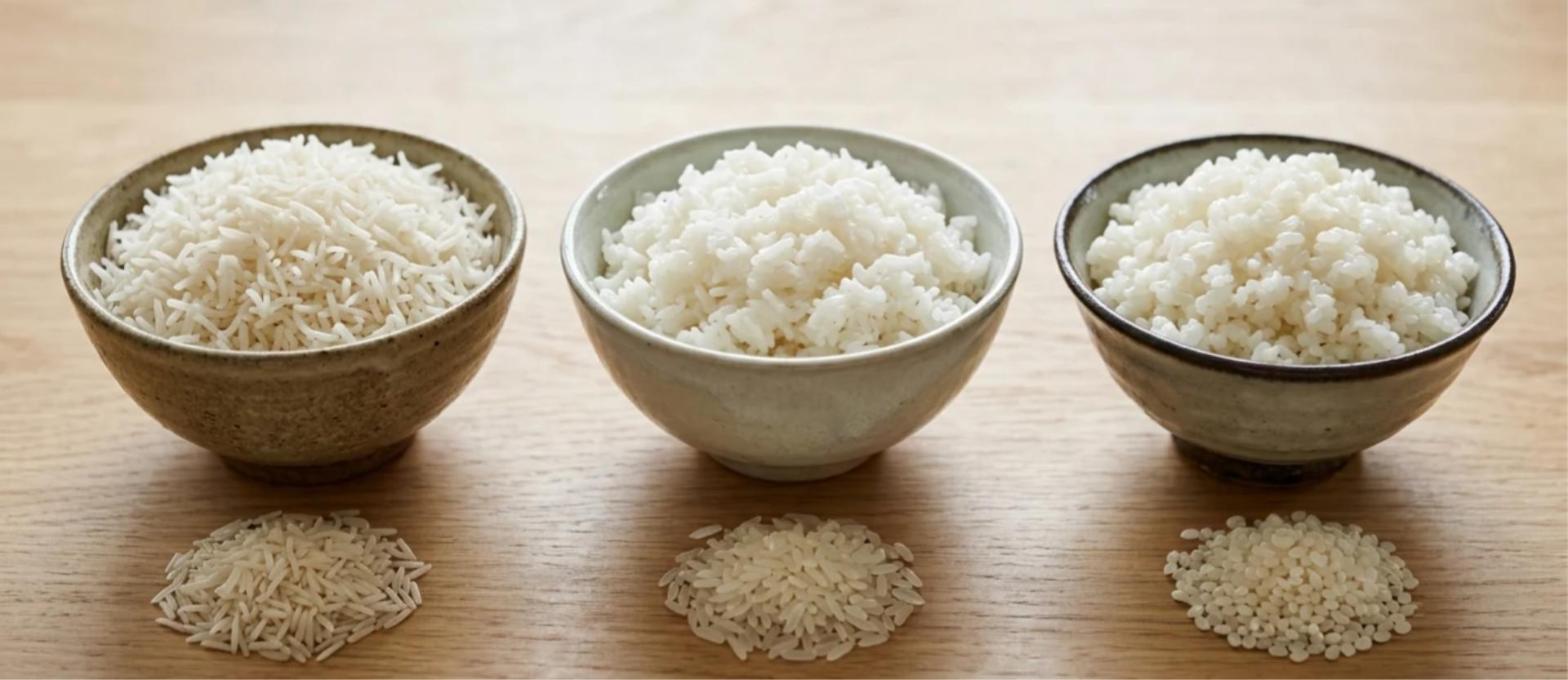
Basmati grains are long and slim, and they get even longer as they cook. The finished rice is fluffy and dry, with each grain separate. That is exactly what biryani and pulao need: rice that holds its shape when layered with masala and steamed again.
Aged basmati usually cooks fluffier and smells stronger than new crop rice, which is why brands sell premium aged grades at a higher price.
Sella basmati (parboiled)
Sella rice is parboiled in the husk before milling. It is slightly golden when raw, very forgiving in the pot, and almost impossible to turn mushy. Extra-long 1121 sella grains, like the KAALAR 1121 Basmati Sella XXL on our shelf, are a favourite for big-batch biryani at weddings, iftar gatherings and family dinners.
How to cook basmati well
Wash in cool water three or four times until the water runs mostly clear.
Soak for 20 to 30 minutes. This is the step most people skip, and it is the one that gives long, unbroken grains.
For biryani, boil in plenty of salted water until about 70 percent cooked, drain, then layer and steam (dum).
For plain rice, use roughly 1.5 cups of water per cup of soaked rice, simmer covered, then rest 10 minutes before opening.
Browse our basmati rice range: India Gate, Daawat, Kohinoor, Mehran, Padma, Ambika and KAALAR, in 1 kg and 5 kg packs.
Aromatic small-grain rice: the Bangladeshi polao secret
Ask any Bangladeshi cook what makes polao smell like home and the answer is the rice. Kalijeera and other small-grain aromatic rice (polao chal) have tiny grains and a sweet, buttery fragrance. Basmati makes a good pulao, but it does not make that polao.
Wash gently, fry the rice in ghee with whole spices before adding water, and use a little less water than you would for basmati. Find VISHAL Kalijeera and PADMA Aromatic Rice in our aromatic rice section.
Thai jasmine (Hom Mali): soft and fragrant
Jasmine rice is long-grain like basmati but cooks softer and slightly sticky, with a gentle floral smell. It is the natural partner for Thai curries and the best choice for fried rice when cooked a day ahead and chilled.
Wash once or twice, no soaking needed, and use about 1.2 to 1.3 cups of water per cup of rice. A rice cooker handles jasmine perfectly. We stock Royal Umbrella, Wonnapob and other Thai Hom Mali rice in 5 kg bags.
Japanese rice: short, sticky and very good
Japanese short-grain rice is sticky by design, so it can be eaten with chopsticks and shaped into onigiri. It will not work for biryani, but it is excellent rice, and many families in Japan happily use it for everyday dal and curry, especially children who grew up here.
If your home rice cooker came with the apartment, it is tuned for Japanese rice. For basmati, use the “quick” setting or cook it on the stove.
Storage in a Japanese apartment
Japanese summers are hot and humid, which is exactly what rice weevils like. A few simple habits keep a 5 kg bag fresh until the last cup:
Move rice into an airtight container after opening.
Keep it away from the stove and out of direct sun.
In summer, store a 1 or 2 kg portion in the fridge if you have space.
A couple of dried bay leaves or dried red chillies in the container is a traditional deterrent.
Buying tip: 1 kg vs 5 kg
If you are trying a new brand, buy 1 kg first. Once you know your family likes it, the 5 kg bag is better value per kilogram and saves you a carry from the station every week.
Long shifts and longer commutes make convenience store dinners tempting. Here are six real halal dinners you can put on the table in about fifteen minutes with a few smart staples in the pantry.
Ülker, Eti and Tayaş are lunchbox favourites for Muslim families in Japan. Here is how to read a Turkish, Indonesian or Malaysian snack label in thirty seconds, which words to look for, and why gelatin is the ingredient to check first.
Fasting in Japan means long workdays, no Ramadan atmosphere outside the masjid, and a halal store that may be a train ride away. Stock this pantry before the first fast and the whole month runs smoother.