The first month in Japan teaches every Muslim the same lesson. The food looks safe, the packaging is beautiful, and then you turn the pack over and find a wall of katakana you cannot read. Is that ポークエキス? Is there みりん in the sauce? Is the gelatin from pork or beef?
The good news: eating halal in Japan is very doable once you have a system. This guide is the system our customers use. It covers the Japanese words to recognise on labels, what is usually fine to buy at a normal supermarket, what to buy from a halal store, and how to keep a pantry that saves you from emergency convenience store dinners.
Why halal is harder in Japan than it looks
Japan has very few Muslims compared with its total population, so most food companies never think about halal when they design a recipe. The problem is rarely the obvious meat. It is the small things hidden inside ordinary products:
- Pork extract and lard in instant noodles, curry roux blocks, gyoza, bread and many snacks.
- Mirin and sake (cooking alcohol) in teriyaki sauce, soba tsuyu, ready meals and many seasonings.
- Gelatin in gummies, yoghurt, desserts and some medicines, usually without saying which animal it came from.
- Shared fryers and grills in restaurants and bento shops.
None of this makes Japan a bad place to live as a Muslim. It just means you need to read labels and keep a reliable source for the things that really matter, like meat and the core ingredients of your home cooking.
The Japanese label words worth memorising
You do not need to read Japanese to shop safely. You need about ten words. Save this list on your phone and compare it with the ingredient list (原材料名, genzairyō-mei) on the back of the pack.
- 豚 / 豚肉 (buta / butaniku): pork, pork meat
- ポーク (pōku): pork, often in ポークエキス (pork extract)
- ラード (rādo): lard
- ゼラチン (zerachin): gelatin, source usually not stated
- みりん (mirin): sweet cooking rice wine
- 酒 / 料理酒 (sake / ryōrishu): rice wine, cooking sake
- 洋酒 (yōshu): Western liquor, common in cakes and chocolates
- アルコール (arukōru): alcohol, sometimes added as a preservative
- ショートニング (shōtoningu): shortening, which can include animal fat
- 乳化剤 (nyūkazai): emulsifier, source usually not stated
Japanese labels also list allergens in a separate box. Pork (豚肉) and gelatin (ゼラチン) are on the recommended allergen list, so many manufacturers print them in that box too. It is a useful second check, but it is not required by law for every product, so always read the full ingredient list as well.
What you can usually buy at a normal Japanese supermarket
You do not have to buy everything from a specialist store. A regular supermarket is a good, affordable source for:
- Fresh vegetables and fruit
- Fresh fish and most seafood (check marinated or seasoned packs for mirin and sake)
- Eggs, milk, plain yoghurt with no gelatin, butter
- Japanese rice, tofu, plain noodles, flour, sugar, salt
- Plain frozen vegetables
Where most people get stuck is meat, stock, ready meals and the spices and pastes their home cooking depends on. That is where a halal grocery earns its place.
What is worth buying from a halal grocery
Meat
Supermarket chicken and beef in Japan are not slaughtered according to Islamic rules. Most Muslim families buy their meat, at least, from a halal source. Look for a halal butcher or a store that sells certified halal meat in your area, and freeze in portions so one trip covers the month.
Rice, flour and lentils for home cooking
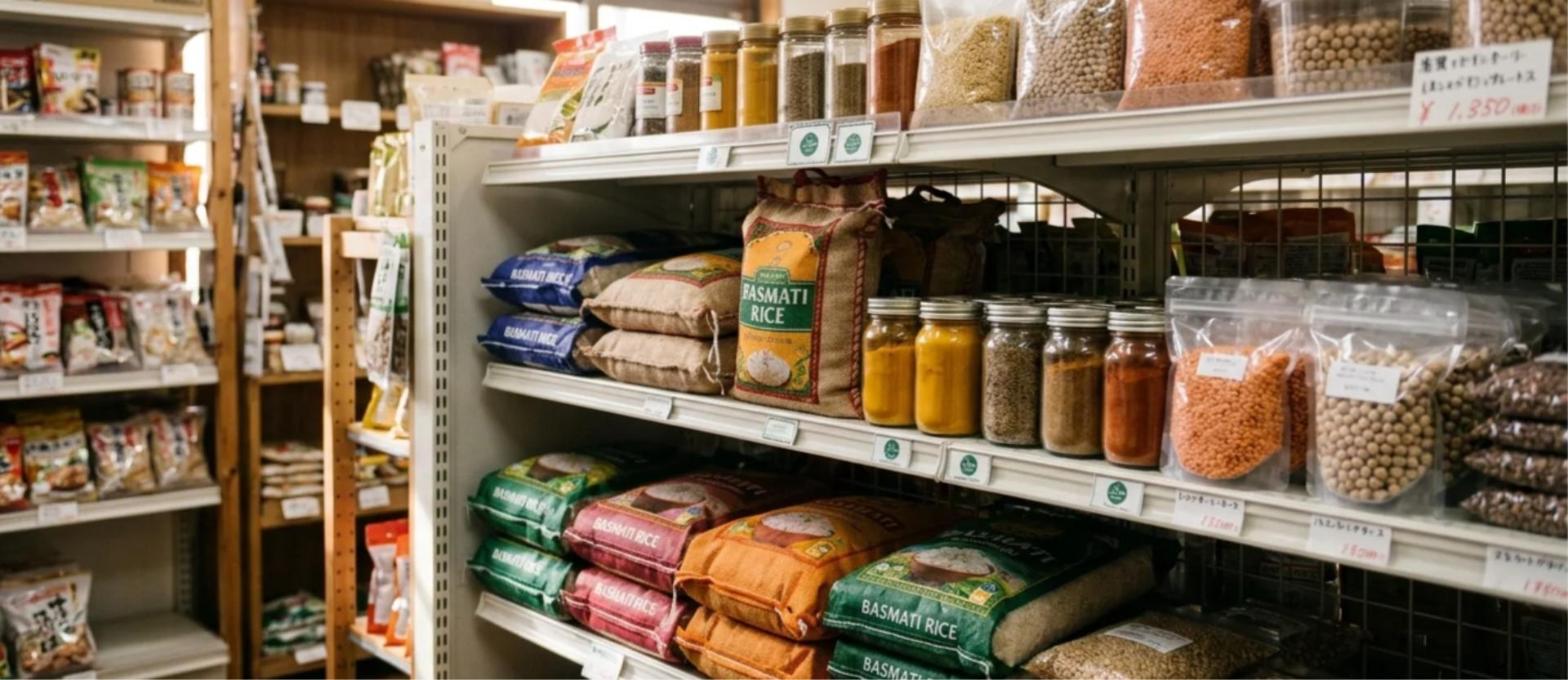
Japanese rice is fine for many meals, but biryani, pulao and everyday dal-bhat taste right with the rice and lentils you grew up with. We stock basmati rice from brands like India Gate, Daawat, Kohinoor, Mehran and Ambika, aromatic polao rice such as Kalijeera, and a full shelf of beans and lentils.
Pastes, sauces and ready-to-eat food
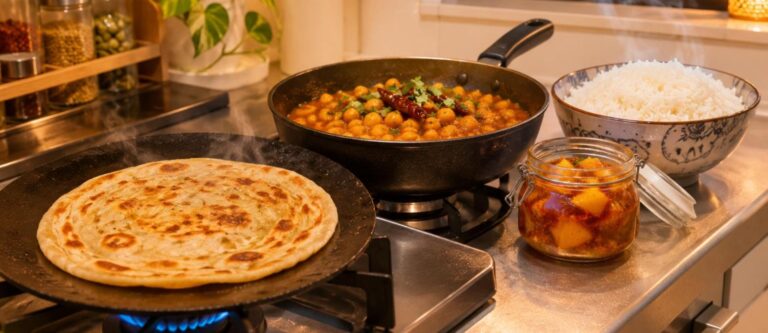
Japanese curry roux and many cooking sauces contain pork extract or alcohol. A halal-friendly alternative is to keep pastes and sauces from countries where these ingredients are the norm: Thai curry pastes, tamarind paste, Turkish tomato paste, tahini. On tired nights, ready-to-eat meals like haleem, paneer dishes and curries are faster than any convenience store run.
The taste of home
Rice alone does not make a kitchen feel like home. Shop by country with our Bangladeshi, Pakistani, Indian, Indonesian, Turkish and Arabian collections.
Eating out without stress
- Use halal restaurant directories. Sites and apps such as Halal Gourmet Japan list restaurants with halal certification or Muslim-friendly menus.
- Ask about the details. “Is there pork or alcohol in this?” (豚肉やお酒は入っていますか? Butaniku ya osake wa haitte imasu ka?) is a polite, normal question in Japan.
- Seafood and vegetarian dishes are safer bets, but ask about the stock (dashi is usually fish based, but some ramen and soup stocks are pork based) and about mirin in the sauce.
- Prayer spaces exist in many airports, some large stations and shopping centres. A quick search for “prayer room” plus your station name saves time.
A simple weekly system that works
- Once a month: stock the pantry from a halal grocery. Rice, atta, lentils, oil or ghee, spices, pastes, dates, a few ready meals.
- Once a week: buy fresh vegetables, fish, eggs and dairy from your local supermarket.
- Always: keep two or three ready-to-eat meals and a pack of frozen paratha at home. This one habit removes most “I had nothing to eat, so I bought something I wasn’t sure about” moments.
The bottom line
Halal living in Japan is not about finding a perfect product for everything. It is about knowing which ten words to look for, which things a normal supermarket does well, and having a dependable halal store for the rest.
When you are ready to stock up, browse the full Eusa Halal Mart shop and build a pantry that makes every week easier.